After Venezuela: Power, Legitimacy, and the Need for Partners
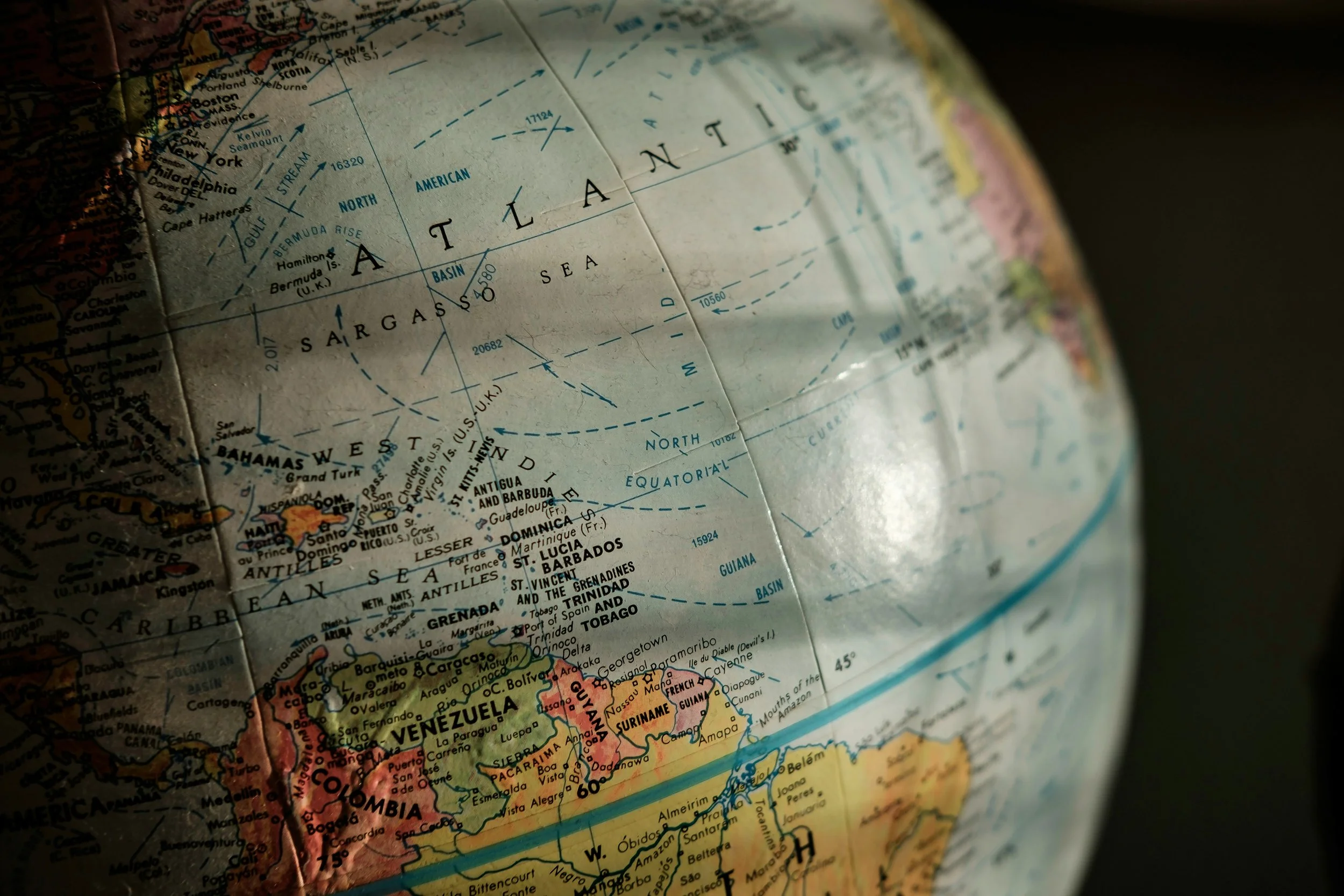
When the United States uses force, debate follows immediately. Was it justified. Was it legal. Was it necessary.
Those questions matter, and they deserve serious consideration. But history suggests they’re rarely the most important ones. The real test of power comes later, when the headlines fade and the consequences remain. What matters most isn’t simply whether action was taken, but whether the conditions exist for stability afterward.
That is the question Venezuela places before the United States and the wider hemisphere today.
The central challenge facing American leadership after Venezuela isn’t whether the United States had the capacity or the right to act. It is whether decisive action can be translated into durable regional stability. In the Western Hemisphere, that translation depends less on unilateral authority alone and more on trusted partners who carry regional credibility and can help shape what comes next.
The Question That Follows the Use of Force
Today, the United States carried out a significant military operation inside Venezuela after months of escalating tension. U.S. officials stated that the operation was intended to remove Nicolás Maduro from power and to hold him accountable for longstanding criminal indictments and alleged ties to corruption and narcotics trafficking. Venezuelan authorities, for their part, denounced the action as foreign aggression and rejected its legitimacy.
These competing claims aren’t unusual in moments like this. They are also revealing.
Maduro didn’t govern a normal state. His continued hold on power followed elections widely criticized by international observers and rejected by many democratic governments. For years, the United States and several allies treated his presidency as lacking democratic legitimacy, a position reflected in sanctions, diplomatic isolation, and criminal charges.
That context explains why pressure mounted and why decisive action was defended by some as necessary. But the collapse of legitimacy inside a country does not automatically produce legitimacy beyond it. When a regime has already lost the confidence of its own people, external action may appear morally defensible. At the same time, when that action is taken without broad regional support, it can deepen uncertainty among neighbors who must absorb the consequences.
Venezuela’s crisis has never been confined to its borders. Its political and economic breakdown reshaped migration patterns, energy flows, and diplomatic alignments across the Caribbean and Latin America. Any major disruption inside Venezuela inevitably sends pressure outward.
Cascading Consequences in a Fragile Hemisphere
One of the most immediate pressure points lies in Cuba.
For years, Venezuela supplied Cuba with oil under preferential terms, helping sustain the Cuban state through prolonged economic stagnation. Any significant shift in Venezuelan energy policy following a change in leadership would place Havana under immediate strain.
In Cuba, energy shortages are felt quickly and personally. Transportation falters. Food distribution becomes uneven. The government’s ability to maintain basic services weakens. The memory of the severe shortages of the 1990s remains vivid, and today’s conditions are in many ways more fragile. The population is older. The workforce has thinned through emigration. Revolutionary legitimacy has eroded.
None of this guarantees regime change. It does, however, create pressure. And pressure without clear pathways often produces instability rather than reform.
Mexico, Sovereignty, and the Limits of Unilateral Action
The most revealing reaction to today’s move did not come from a distant rival. It came from a neighbor.
Mexico’s president publicly condemned the military operation, citing principles of sovereignty and the prohibition on the use of force under international law. Her statement reflected Mexico’s long-standing doctrine of non-intervention and underscored regional concerns about precedent.
Respect for international norms does not require the United States to surrender its judgment or its right to act in defense of its interests. But in a hemisphere shaped by history, sovereignty, and long experience with intervention, how power is exercised can matter as much as whether it is justified.
Mexico’s response should not be dismissed as political theater. It reflects a deeper concern about regional order.
Mexico occupies a uniquely difficult position. It is deeply integrated with the United States while facing serious internal security challenges, including drug trafficking and cartel violence concentrated in specific regions. From Mexico City’s perspective, regime change carried out without broad regional consultation raises uncomfortable questions. Where are the boundaries. How narrowly are the criteria defined. And who decides when necessity overrides sovereignty.
Public opposition in this context serves a purpose. It reassures domestic audiences. It asserts independence. And it signals that partnership can’t be assumed without legitimacy and consultation.
Presidential Authority and the Burden of Legitimacy
Under modern precedent, American presidents possess broad authority to use force. That reality has emerged through a combination of constitutional interpretation, statutory frameworks, and decades of congressional reluctance to assert its responsibilities.
That authority helps explain how action was taken. It does not resolve the consequences that follow.
Legal justification does not automatically produce regional acceptance. Tactical success does not guarantee strategic stability. When Congress remains largely silent, the burden of legitimacy shifts outward to allies and partners whose response determines whether an action stabilizes a region or unsettles it further.
The Constitution did not make decisions of war easy. That difficulty was intentional. It was meant to slow judgment and broaden responsibility. In a world where speed has replaced deliberation, legitimacy and partnership must now perform much of that work.
From Disruption to Durable Order
Alliances are often discussed in terms of deterrence. In practice, they matter even more after force is applied.
After action, partners help legitimize outcomes. They share responsibility for stabilization. They reduce the risk of backlash. And they provide diplomatic pathways that military power alone cannot create.
Partnerships aren’t a substitute for American leadership. They’re the means by which American leadership endures.
Without credible partners, even justified actions can leave a vacuum. Neighbors hedge. Institutions weaken. Rivals exploit uncertainty. In Latin America, where memories of intervention run deep, unilateral action can reinforce suspicion rather than confidence.
Influence in the hemisphere depends less on dominance than on trust.
Periods of disruption also create opportunity.
Any meaningful transition in Venezuela will require mediation, economic reintegration, energy coordination, and refugee management. These are not military tasks. They’re political and institutional ones that demand cooperation among regional actors with credibility and staying power.
The United States remains essential to that effort. It is not sufficient by itself.
Stability will depend on whether credible regional partners are prepared to absorb shock, shape outcomes, and carry legitimacy where the United States alone can’t. This is the difference between managing a crisis and building an order.
I’ve argued elsewhere that durable American leadership depends on identifying and working through key regional partners capable of anchoring stability beyond the reach of U.S. power alone.
American leadership has never rested solely on the ability to act decisively. It has rested on the ability to align strength with legitimacy and authority with restraint.
Venezuela is a reminder that force is only the opening chapter. What follows determines whether power produces order or merely postpones disorder.
In a fragile hemisphere, power exercised without partners creates risk, not stability. Leadership requires more than action. It requires the patience and discipline to ensure that others are willing and able to carry what comes next.
