The Islamic Republic and the Limits of Diplomacy
There are moments in foreign policy when the real question is not whether an agreement can be signed, but whether the government across the table is willing to sustain it.
This is one of those moments.
American carriers and strategic assets have moved into the region. Iranian officials issue warnings. Diplomats signal openness. The cycle of pressure and negotiation continues.
But the underlying issue hasn’t changed.
Iran’s challenge is not confined to enrichment levels. It’s rooted in the character of the Islamic Republic itself.
Since 1979, the regime in Tehran has defined much of its legitimacy through resistance to the United States and hostility toward Israel. The seizure of the American embassy and the 444-day hostage crisis weren’t diplomatic accidents. They were declarations that signaled how the new regime intended to position itself within the international order.
That posture has endured across administrations, sanctions, and negotiation frameworks.
This continuity matters more than any single technical provision.
A nuclear-armed Iran would destabilize the Middle East immediately. Israel understands this better than anyone. Its citizens live within range of Iran’s expanding missile infrastructure and the proxy network Tehran has built for decades.
Enrichment limits matter. Inspection regimes matter. Verification matters.
But nuclear diplomacy addresses capability more easily than conduct.
Iran’s missile program and its reliance on regional proxies aren’t side projects. They’re the architecture of its influence. From Hezbollah’s formation in the early 1980s to its entrenchment in Syria and material support for armed movements across the region, the regime has invested patiently in asymmetric leverage. This wasn’t a reaction to one American president or one Israeli government. It reflects a long-term strategy to reshape the regional balance of power without conventional war.
An agreement that narrows enrichment while leaving this broader structure intact may reduce risk in one domain, but it preserves pressure in others.
From Washington, a negotiated pause can look like progress. From Jerusalem, it looks temporary.
A couple of weeks ago, I was in the West Bank and then near the Gaza border. I stood inside bomb shelters with bullet-lined walls and spoke with people who don’t experience this debate as policy. They experience it as sirens, tunnels, and the knowledge that threats from Tehran often turn into missiles in the air and weapons on the ground. When you live within range, deterrence isn’t a theory. It’s survival.
Israel’s skepticism toward narrow frameworks is shaped by location and experience. When policy miscalculates, Israel absorbs the consequences first.
Standing with Israel doesn’t require rejecting diplomacy. It requires clarity about what diplomacy must actually accomplish to change risk on the ground.
But this issue extends beyond Israel.
For the United States, Iran represents a broader test of credibility. Regional actors pay attention to what is enforced and not just what is said. If agreements repeatedly address narrow technical limits while destabilizing behavior continues through proxies and deniable escalation, the lesson absorbed by adversaries is not moderation. It’s tolerance.
Regional order depends not only on preventing nuclear proliferation, but on reinforcing deterrence and predictable state behavior. When a regime advances its interests through strategic ambiguity and indirect confrontation, it probes the resilience of that order.
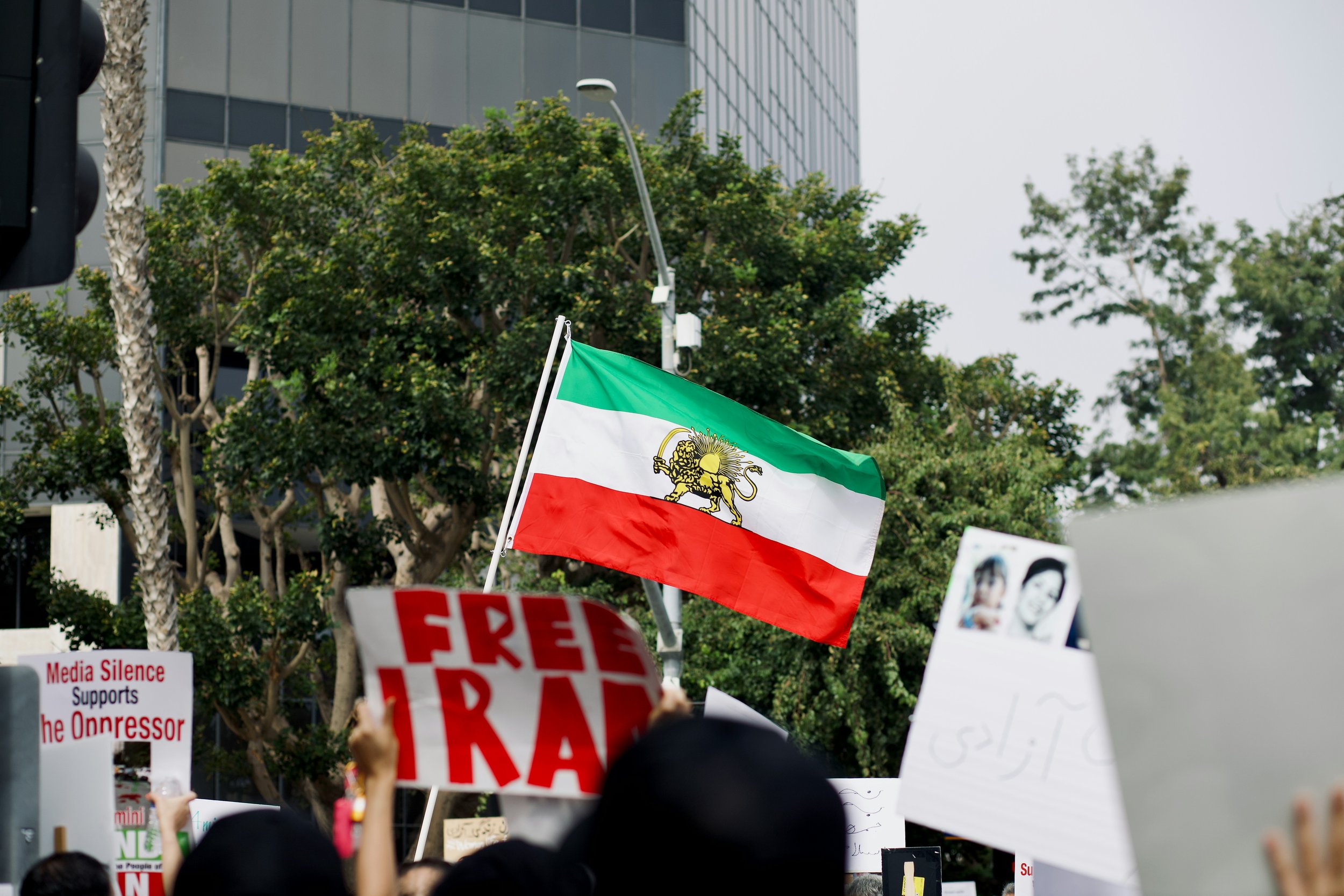
Iran, however, is more than the Islamic Republic. It’s a nation with a long civilizational memory and a people distinct from the revolutionary ideology that took power in 1979. Before the revolution, Iran maintained pragmatic ties with the United States and engaged Israel through quiet but meaningful cooperation. The rupture that occurred in 1979 was not cultural. It was structural. The revolution reoriented the state’s posture toward the West and embedded confrontation into its governing identity.
It reminds us that today’s tensions are not inevitable features of Iranian history. They’re the product of a specific political order.
The Iranian people have repeatedly shown resilience under repression. They carry a history older than the current regime and should be distinguished from the system that governs them.
Political systems can endure for decades, but they don’t endure forever.
The phrase “regime change” often triggers understandable caution. America has learned hard lessons about imposing outcomes through force. No serious strategy should treat forced overthrow as a simple solution.
Yet it is equally unrealistic to ignore structural incompatibility.
Some governments can be deterred into stable coexistence. Others embed confrontation into their governing identity. If the Islamic Republic continues to derive internal cohesion from opposition to the West and from eliminationist rhetoric toward Israel, then narrow nuclear agreements will at best delay escalation. They will not resolve it.
Diplomacy can reduce immediate danger and buy time. But it cannot by itself alter a regime’s foundational posture.
If durable stability is the objective, then the political character of the regime in Tehran eventually must evolve beyond confrontation as its organizing principle. That evolution, if it comes, will come from within Iran, not from abroad. But pretending that structural change is irrelevant doesn’t make it so.
A coherent American strategy must align deterrence, alliance management, and negotiation without illusion. Deterrence must be credible and predictable. Coordination with Israel and regional partners must be substantive, not symbolic. Economic and diplomatic pressure must focus on the regime’s coercive infrastructure rather than episodic signaling. Negotiations should continue where they meaningfully reduce risk, but without overstating what they can achieve.
Realism doesn’t reject diplomacy. It rejects the assumption that diplomacy alone resolves ideological conflict.
Centrifuges can be monitored. Facilities can be inspected. Agreements can be signed.
But unless the governing system in Tehran moves beyond its confrontational posture, those agreements will remain provisional.
Recognizing that reality is not alarmism.
It’s strategic clarity.
